
-
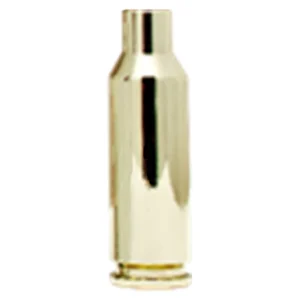
Hornady Brass 6mm ARC Box of 50
Hornady produces brass with the same precision, attention to detail and focus on perfection that has made them a world leader in bullets. They measure their brass for consistent wall concentricity, tests pressure calibration to ensure uniform case expansion and hand-inspects each piece.
This dedication to quality ensures proper seating of the bullet both in the case and in the chamber and consistent charges and pressures. The result is optimal velocity and repeatable accuracy from your cartridges. New, unprimed brass. This is not loaded ammunition.
Brass Preparation: With bulk rifle brass you may sometimes notice a few case mouths are “out of round” or slightly dented below the shoulder. These imperfections occur in the final tumbling wash operation after the case mouth has been annealed. Brass manufacturers are aware of the case cosmetics and have worked to mitigate it, but due to equipment design, denting may still occur. Minor dents are normally removed in the first firing and will not affect case life or performance. On non-plated brass, you may also notice all the anneal stain might not be polished off, which may give the case neck a pinkish color. With some smaller caliber cases you may notice the case mouths to be slightly belled.
With all new rifle brass, you should first straighten out the case and case mouth, then chamfer and debur the case mouth inside and out. To straighten the case mouth, run the case part way into the sizer die and let the expander ball straighten the brass. To prevent the case neck from stretching, be sure to lubricate the case neck inside the case mouth.
CAD $54.00 -
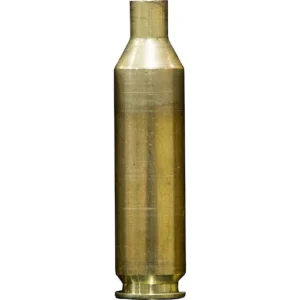
Hornady Brass 22 Creedmoor Box of 50
Hornady produces brass with the same precision, attention to detail and focus on perfection that has made them a world leader in bullets. They measure their brass for consistent wall concentricity, tests pressure calibration to ensure uniform case expansion and hand-inspects each piece.
This dedication to quality ensures proper seating of the bullet both in the case and in the chamber and consistent charges and pressures. The result is optimal velocity and repeatable accuracy from your cartridges. New, unprimed brass. This is not loaded ammunition.
Brass Preparation: With bulk rifle brass you may sometimes notice a few case mouths are “out of round” or slightly dented below the shoulder. These imperfections occur in the final tumbling wash operation after the case mouth has been annealed. Brass manufacturers are aware of the case cosmetics and have worked to mitigate it, but due to equipment design, denting may still occur. Minor dents are normally removed in the first firing and will not affect case life or performance. On non-plated brass, you may also notice all the anneal stain might not be polished off, which may give the case neck a pinkish color. With some smaller caliber cases you may notice the case mouths to be slightly belled.
With all new rifle brass, you should first straighten out the case and case mouth, then chamfer and debur the case mouth inside and out. To straighten the case mouth, run the case part way into the sizer die and let the expander ball straighten the brass. To prevent the case neck from stretching, be sure to lubricate the case neck inside the case mouth.
CAD $54.00 -
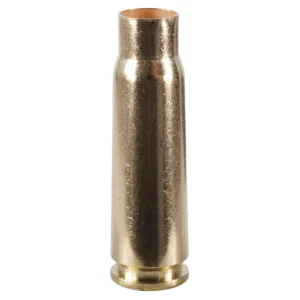
Hornady Brass 7.62x39mm Box of 50
Hornady produces brass with the same precision, attention to detail and focus on perfection that has made them a world leader in bullets. They measure their brass for consistent wall concentricity, tests pressure calibration to ensure uniform case expansion and hand-inspects each piece.
This dedication to quality ensures proper seating of the bullet both in the case and in the chamber and consistent charges and pressures. The result is optimal velocity and repeatable accuracy from your cartridges. New, unprimed brass. This is not loaded ammunition.
Brass Preparation: With bulk rifle brass you may sometimes notice a few case mouths are “out of round” or slightly dented below the shoulder. These imperfections occur in the final tumbling wash operation after the case mouth has been annealed. Brass manufacturers are aware of the case cosmetics and have worked to mitigate it, but due to equipment design, denting may still occur. Minor dents are normally removed in the first firing and will not affect case life or performance. On non-plated brass, you may also notice all the anneal stain might not be polished off, which may give the case neck a pinkish color. With some smaller caliber cases you may notice the case mouths to be slightly belled.
With all new rifle brass, you should first straighten out the case and case mouth, then chamfer and debur the case mouth inside and out. To straighten the case mouth, run the case part way into the sizer die and let the expander ball straighten the brass. To prevent the case neck from stretching, be sure to lubricate the case neck inside the case mouth.
CAD $54.00 -
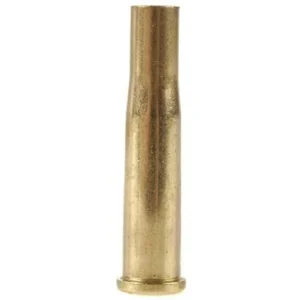
Remington Brass 22 Hornet Bag of 100
Remington cartridge cases are carefully drawn from specially-alloyed brass to provide consistently exact internal volume and resistance to case stretching and brittleness. Primer pocket tolerances are held to .001″, and closely monitored case neck annealing ensures easier re-sizing and longer reloading life. New, unprimed brass. This is not loaded ammunition. Bulk brass should be full-length sized, trimmed and chamfered before loading.
Brass Preparation: With bulk rifle brass you may sometimes notice a few case mouths are “out of round” or slightly dented below the shoulder. These imperfections occur in the final tumbling wash operation after the case mouth has been annealed. Brass manufacturers are aware of the case cosmetics and have worked to mitigate it, but due to equipment design, denting may still occur. Minor dents are normally removed in the first firing and will not affect case life or performance. On non-plated brass, you may also notice all the anneal stain might not be polished off, which may give the case neck a pinkish color. With some smaller caliber cases you may notice the case mouths to be slightly belled.With all new rifle brass, you should first straighten out the case and case mouth, then chamfer and debur the case mouth inside and out. To straighten the case mouth, run the case part way into the sizer die and let the expander ball straighten the brass. To prevent the case neck from stretching, be sure to lubricate the case neck inside the case mouth.
If you are using Nickel plated brass, special care must be taken to lubricate the cases prior to sizing them. Nickel plating is harder than brass and the cases require more effort in sizing. In the event a case becomes stuck, purchase a stuck case remover; don’t use pliers, screwdrivers or other common household tools which could damage your sizing die.
CAD $54.00 -
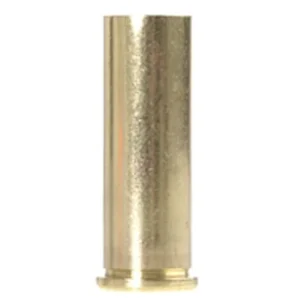
Remington Brass 260 Remington Bag of 50
Remington cartridge cases are carefully drawn from specially-alloyed brass to provide consistently exact internal volume and resistance to case stretching and brittleness. Primer pocket tolerances are held to .001″, and closely monitored case neck annealing ensures easier re-sizing and longer reloading life. New, unprimed brass. This is not loaded ammunition. Bulk brass should be full-length sized, trimmed and chamfered before loading.
Brass Preparation: With bulk rifle brass you may sometimes notice a few case mouths are “out of round” or slightly dented below the shoulder. These imperfections occur in the final tumbling wash operation after the case mouth has been annealed. Brass manufacturers are aware of the case cosmetics and have worked to mitigate it, but due to equipment design, denting may still occur. Minor dents are normally removed in the first firing and will not affect case life or performance. On non-plated brass, you may also notice all the anneal stain might not be polished off, which may give the case neck a pinkish color. With some smaller caliber cases you may notice the case mouths to be slightly belled.With all new rifle brass, you should first straighten out the case and case mouth, then chamfer and debur the case mouth inside and out. To straighten the case mouth, run the case part way into the sizer die and let the expander ball straighten the brass. To prevent the case neck from stretching, be sure to lubricate the case neck inside the case mouth.
If you are using Nickel plated brass, special care must be taken to lubricate the cases prior to sizing them. Nickel plating is harder than brass and the cases require more effort in sizing. In the event a case becomes stuck, purchase a stuck case remover; don’t use pliers, screwdrivers or other common household tools which could damage your sizing die.
CAD $54.00 -
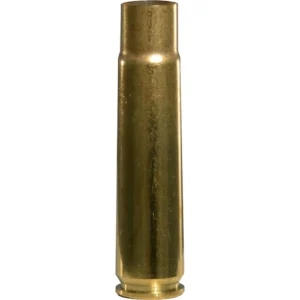
Hornady Brass 35 Remington Box of 50
Hornady produces brass with the same precision, attention to detail and focus on perfection that has made them a world leader in bullets. They measure their brass for consistent wall concentricity, tests pressure calibration to ensure uniform case expansion and hand-inspects each piece.
This dedication to quality ensures proper seating of the bullet both in the case and in the chamber and consistent charges and pressures. The result is optimal velocity and repeatable accuracy from your cartridges. New, unprimed brass. This is not loaded ammunition.
Brass Preparation: With bulk rifle brass you may sometimes notice a few case mouths are “out of round” or slightly dented below the shoulder. These imperfections occur in the final tumbling wash operation after the case mouth has been annealed. Brass manufacturers are aware of the case cosmetics and have worked to mitigate it, but due to equipment design, denting may still occur. Minor dents are normally removed in the first firing and will not affect case life or performance. On non-plated brass, you may also notice all the anneal stain might not be polished off, which may give the case neck a pinkish color. With some smaller caliber cases you may notice the case mouths to be slightly belled.
With all new rifle brass, you should first straighten out the case and case mouth, then chamfer and debur the case mouth inside and out. To straighten the case mouth, run the case part way into the sizer die and let the expander ball straighten the brass. To prevent the case neck from stretching, be sure to lubricate the case neck inside the case mouth.
CAD $55.00 -
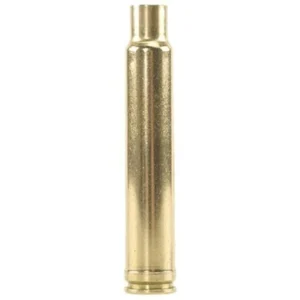
Quality Cartridge Brass 358 Shooting Times Alaskan Box of 20
Quality Cartridge started in 1990 manufacturing custom, obsolete and wildcat cartridge cases. Quality Cartridge uses the highest quality materials and equipment to produce the best brass available. Along with the high quality of their products Quality Cartridge also properly head stamps over 450 different calibers from popular wildcats to obsolete cartridges. It is easy to see why Quality Cartridge has become the go-to source for obscure cartridge needs.
Because of variations in case size for some specialty cartridges, it is best to check the brass against a fired case from a particular firearm to ensure suitability. Whenever possible, brass has been formed to published standards for the cartridge. This is not loaded ammunition.
Brass Preparation: With bulk rifle brass you may sometimes notice a few case mouths are “out of round” or slightly dented below the shoulder. These imperfections occur in the final tumbling wash operation after the case mouth has been annealed. Brass manufacturers are aware of the case cosmetics and have worked to mitigate it, but due to equipment design, denting may still occur. Minor dents are normally removed in the first firing and will not affect case life or performance. On non-plated brass, you may also notice all the anneal stain might not be polished off, which may give the case neck a pinkish color. With some smaller caliber cases you may notice the case mouths to be slightly belled.
With all new rifle brass, you should first straighten out the case and case mouth, then chamfer and debur the case mouth inside and out. To straighten the case mouth, run the case part way into the sizer die and let the expander ball straighten the brass. To prevent the case neck from stretching, be sure to lubricate the case neck inside the case mouth.
CAD $55.00 -
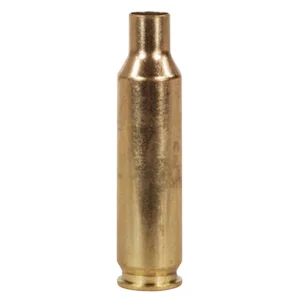
Starline Brass 6.5 Creedmoor
Starline Brass prides itself on producing the highest quality brass case available. Their brass is comprised of 70% copper and 30% zinc and is vertically drawn during the manufacturing process which results in more uniform wall thickness. Cases are annealed between each draw to ensure consistent metallurgy in all lots. Each brass case is hand inspected to guarantee the highest quality possible.
Starline Brass is located in Sedalia, MO and has been in business for over 30 years. Trust Starline for your next reloads, you won’t be disappointed. New, unprimed brass. This is not loaded ammunition. Bulk brass should be full-length sized, trimmed and chamfered before loading.
Brass Preparation: With bulk rifle brass you may sometimes notice a few case mouths are “out of round” or slightly dented below the shoulder. These imperfections occur in the final tumbling wash operation after the case mouth has been annealed. Brass manufacturers are aware of the case cosmetics and have worked to mitigate it, but due to equipment design, denting may still occur. Minor dents are normally removed in the first firing and will not affect case life or performance. On non-plated brass, you may also notice all the anneal stain might not be polished off, which may give the case neck a pinkish color. With some smaller caliber cases you may notice the case mouths to be slightly belled.
With all new rifle brass, you should first straighten out the case and case mouth, then chamfer and debur the case mouth inside and out. To straighten the case mouth, run the case part way into the sizer die and let the expander ball straighten the brass. To prevent the case neck from stretching, be sure to lubricate the case neck inside the case mouth.
If you are using Nickel plated brass, special care must be taken to lubricate the cases prior to sizing them. Nickel plating is harder than brass and the cases require more effort in sizing. In the event a case becomes stuck, purchase a stuck case remover; don’t use pliers, screwdrivers or other common household tools which could damage your sizing die.
CAD $55.76 -
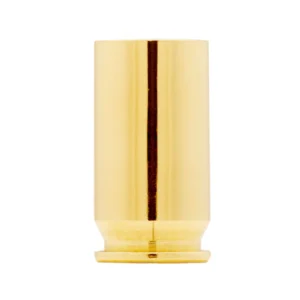
Starline Brass 45 Super
Starline Brass prides itself on producing the highest quality brass case available. Their brass is comprised of 70% copper and 30% zinc and is vertically drawn during the manufacturing process which results in more uniform wall thickness. Cases are annealed between each draw to ensure consistent metallurgy in all lots. Each brass case is hand inspected to guarantee the highest quality possible.
Starline Brass is located in Sedalia, MO and has been in business for over 30 years. Trust Starline for your next reloads, you won’t be disappointed. New, unprimed brass. This is not loaded ammunition. Bulk brass should be full-length sized, trimmed and chamfered before loading.
Brass Preparation: With bulk rifle brass you may sometimes notice a few case mouths are “out of round” or slightly dented below the shoulder. These imperfections occur in the final tumbling wash operation after the case mouth has been annealed. Brass manufacturers are aware of the case cosmetics and have worked to mitigate it, but due to equipment design, denting may still occur. Minor dents are normally removed in the first firing and will not affect case life or performance. On non-plated brass, you may also notice all the anneal stain might not be polished off, which may give the case neck a pinkish color. With some smaller caliber cases you may notice the case mouths to be slightly belled.
With all new rifle brass, you should first straighten out the case and case mouth, then chamfer and debur the case mouth inside and out. To straighten the case mouth, run the case part way into the sizer die and let the expander ball straighten the brass. To prevent the case neck from stretching, be sure to lubricate the case neck inside the case mouth.
If you are using Nickel plated brass, special care must be taken to lubricate the cases prior to sizing them. Nickel plating is harder than brass and the cases require more effort in sizing. In the event a case becomes stuck, purchase a stuck case remover; don’t use pliers, screwdrivers or other common household tools which could damage your sizing die.
CAD $55.76 -
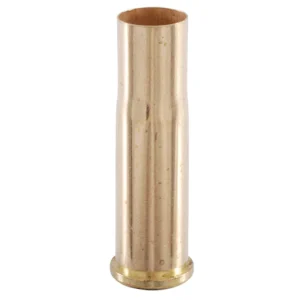
Starline Brass 32-20 WCF
Designed for use in rifles and single action revolvers, this cartridge is making a strong comeback with the advent of cowboy action shooting. This cartridge can also be formed by experienced cartridge converters into .25-20 and .218 Bee. And with special forming dies available from RCBS and Lee, you can form a shortened version of the 7.62 Nagant cartridge. Overall length of this brass is 1.280-1.286″.
Note: The SAAMI spec for .25-20 & .218 Bee is smaller at the base than the .32-20 which can cause clearance issues on some rifles.
Starline Brass prides itself on producing the highest quality brass case available. Their brass is comprised of 70% copper and 30% zinc and is vertically drawn during the manufacturing process which results in more uniform wall thickness. Cases are annealed between each draw to ensure consistent metallurgy in all lots. Each brass case is hand inspected to guarantee the highest quality possible.
Starline Brass is located in Sedalia, MO and has been in business for over 30 years. Trust Starline for your next reloads, you won’t be disappointed. New, unprimed brass. This is not loaded ammunition. Bulk brass should be full-length sized, trimmed and chamfered before loading.
Brass Preparation: With bulk rifle brass you may sometimes notice a few case mouths are “out of round” or slightly dented below the shoulder. These imperfections occur in the final tumbling wash operation after the case mouth has been annealed. Brass manufacturers are aware of the case cosmetics and have worked to mitigate it, but due to equipment design, denting may still occur. Minor dents are normally removed in the first firing and will not affect case life or performance. On non-plated brass, you may also notice all the anneal stain might not be polished off, which may give the case neck a pinkish color. With some smaller caliber cases you may notice the case mouths to be slightly belled.
With all new rifle brass, you should first straighten out the case and case mouth, then chamfer and debur the case mouth inside and out. To straighten the case mouth, run the case part way into the sizer die and let the expander ball straighten the brass. To prevent the case neck from stretching, be sure to lubricate the case neck inside the case mouth.
If you are using Nickel plated brass, special care must be taken to lubricate the cases prior to sizing them. Nickel plating is harder than brass and the cases require more effort in sizing. In the event a case becomes stuck, purchase a stuck case remover; don’t use pliers, screwdrivers or other common household tools which could damage your sizing die.
CAD $55.76 -
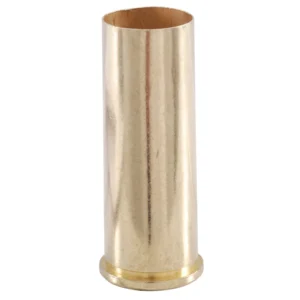
Starline Brass 44-40 WCF
Starline Brass prides itself on producing the highest quality brass case available. Their brass is comprised of 70% copper and 30% zinc and is vertically drawn during the manufacturing process which results in more uniform wall thickness. Cases are annealed between each draw to ensure consistent metallurgy in all lots. Each brass case is hand inspected to guarantee the highest quality possible.
Starline Brass is located in Sedalia, MO and has been in business for over 30 years. Trust Starline for your next reloads, you won’t be disappointed. New, unprimed brass. This is not loaded ammunition. Bulk brass should be full-length sized, trimmed and chamfered before loading.
Brass Preparation: With bulk rifle brass you may sometimes notice a few case mouths are “out of round” or slightly dented below the shoulder. These imperfections occur in the final tumbling wash operation after the case mouth has been annealed. Brass manufacturers are aware of the case cosmetics and have worked to mitigate it, but due to equipment design, denting may still occur. Minor dents are normally removed in the first firing and will not affect case life or performance. On non-plated brass, you may also notice all the anneal stain might not be polished off, which may give the case neck a pinkish color. With some smaller caliber cases you may notice the case mouths to be slightly belled.
With all new rifle brass, you should first straighten out the case and case mouth, then chamfer and debur the case mouth inside and out. To straighten the case mouth, run the case part way into the sizer die and let the expander ball straighten the brass. To prevent the case neck from stretching, be sure to lubricate the case neck inside the case mouth.
If you are using Nickel plated brass, special care must be taken to lubricate the cases prior to sizing them. Nickel plating is harder than brass and the cases require more effort in sizing. In the event a case becomes stuck, purchase a stuck case remover; don’t use pliers, screwdrivers or other common household tools which could damage your sizing die.
CAD $55.76 -
Hornady Brass 460 S&W Magnum Box of 50
Hornady produces brass with the same precision, attention to detail and focus on perfection that has made them a world leader in bullets. They measure their brass for consistent wall concentricity, tests pressure calibration to ensure uniform case expansion and hand-inspects each piece.
This dedication to quality ensures proper seating of the bullet both in the case and in the chamber and consistent charges and pressures. The result is optimal velocity and repeatable accuracy from your cartridges. New, unprimed brass. This is not loaded ammunition.
Brass Preparation: With bulk rifle brass you may sometimes notice a few case mouths are “out of round” or slightly dented below the shoulder. These imperfections occur in the final tumbling wash operation after the case mouth has been annealed. Brass manufacturers are aware of the case cosmetics and have worked to mitigate it, but due to equipment design, denting may still occur. Minor dents are normally removed in the first firing and will not affect case life or performance. On non-plated brass, you may also notice all the anneal stain might not be polished off, which may give the case neck a pinkish color. With some smaller caliber cases you may notice the case mouths to be slightly belled.
With all new rifle brass, you should first straighten out the case and case mouth, then chamfer and debur the case mouth inside and out. To straighten the case mouth, run the case part way into the sizer die and let the expander ball straighten the brass. To prevent the case neck from stretching, be sure to lubricate the case neck inside the case mouth.
CAD $56.00
- Home
- Handgun Ammunition
- 10mm Auto
- 25 ACP
- 30 Super Carry
- 32 ACP
- 32 H&R Magnum
- 32 S&W
- 32 S&W Long
- 327 Federal Magnum
- 357 Magnum
- 357 Sig
- 38 S&W
- 38 Special
- 38 Super
- 380 ACP
- 40 S&W
- 40 Super
- 400 Cor-Bon
- 41 Remington Magnum
- 44 Remington Magnum
- 44 Special
- 45 ACP
- 45 Auto Rim
- 45 Colt (Long Colt)
- 45 GAP
- 45 Super
- 45 Winchester Magnum
- 454 Casull
- 460 Rowland
- 460 S&W Magnum
- 5.7x28mm FN
- 50 Action Express
- 500 JRH
- 500 S&W Magnum
- 7.62x25mm Tokarev
- 9mm Luger
- 9mm Makarov
- 9x25mm Dillon
- Primers
- Reloading Brass
- Smokeless Powder
- Rifle Ammunition
- 17 Remington
- 204 Ruger
- 22 Hornet
- 22 Nosler
- 22-250 Remington
- 220 Swift
- 221 Fireball
- 222 Remington
- 223 Remington
- 223 Winchester Super Short Magnum
- 224 Valkyrie
- 243 Winchester
- 25-06 Remington
- 257 Roberts
- 257 Weatherby Magnum
- 260 Remington
- 264 Winchester Magnum
- 270 Weatherby Magnum
- 270 Winchester
- 270 Winchester Short Magnum
- 28 Nosler
- 280 Remington
- 280 Remington Ackley Improved 40-Degree Shoulder
- 30 Carbine
- 30 Nosler
- 30-06 Springfield
- 30-30 Winchester
- 30-378 Weatherby Magnum
- 30-40 Krag
- 300 AAC Blackout (7.62x35mm)
- 300 H&H Magnum
- 300 PRC
- 300 Remington Short Action Ultra Magnum
- 300 Remington Ultra Magnum
- 300 Savage
- 300 Weatherby Magnum
- 300 Winchester Magnum
- 300 Winchester Short Magnum
- 303 British
- 308 Winchester
- 32 Winchester Special
- 32-20 WCF
- 325 Winchester Short Magnum (WSM)
- 33 Nosler
- 338 Federal
- 338 Lapua Magnum
- 338 Remington Ultra Magnum
- 338 Winchester Magnum
- 338-06 A-Square
- 340 Weatherby Magnum
- 35 Remington
- 35 Whelen
- 350 Legend
- 358 Winchester
- 375 H&H Magnum
- 375 Ruger
- 375 SOCOM
- 38-55 WCF
- 4.6x30mm HK
- 404 Jeffery
- 416 Remington Magnum
- 416 Rigby
- 44-40 WCF
- 444 Marlin
- 45 Raptor
- 45-70 Government
- 450 Bushmaster
- 458 HAMR
- 458 Lott
- 458 SOCOM
- 458 Winchester Magnum
- 460 Weatherby Magnum
- 470 Nitro Express
- 5.56x45mm NATO
- 50 Beowulf
- 500 Auto Max
- 500 Nitro Express 3″
- 6.5 Creedmoor
- 6.5 Grendel
- 6.5 PRC
- 6.5-300 Weatherby Magnum
- 6.5mm-284 Norma
- 6.5x47mm Lapua
- 6.5x55mm Swedish Mauser
- 6.8 Western
- 6.8mm Remington SPC
- 6mm Advanced Rifle Cartridge (6mm ARC)
- 6mm Creedmoor
- 6mm Remington
- 7.62x39mm
- 7.62x51mm NATO
- 7.62x54mm Rimmed Russian
- 7mm Remington Magnum
- 7mm Remington Short Action Ultra Magnum
- 7mm Remington Ultra Magnum
- 7mm STW
- 7mm Weatherby Magnum
- 7mm-08 Remington
- 7x57mm Mauser (7mm Mauser)
- 7x64mm Brenneke
- 8mm Remington Magnum
- 8x57mm JS Mauser (8mm Mauser) (323 Dia)
- 9.3x62mm Mauser
- 9.3x74mm Rimmed
- Rimfire Ammunition
- Shotgun Ammunition