
-
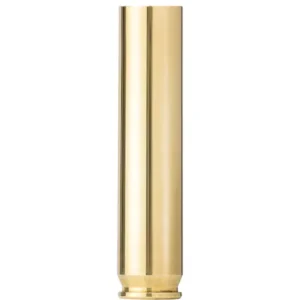
Specifications Product Information Cartridge 32 Winchester Special Finish Brass Condition New Quantity 50 Piece Primed No
Winchester Reloading Brass is manufactured to extremely tight tolerances to ensure smooth feeding and positive chambering. Consistent case-to-case weight and capacity delivers outstanding accuracy. Winchester’s high quality, durable brass can be reloaded several times. New, unprimed brass. This is not loaded ammunition.
Brass Preparation: With bulk rifle brass you may sometimes notice a few case mouths are “out of round” or slightly dented below the shoulder. These imperfections occur in the final tumbling wash operation after the case mouth has been annealed. Brass manufacturers are aware of the case cosmetics and have worked to mitigate it, but due to equipment design, denting may still occur. Minor dents are normally removed in the first firing and will not affect case life or performance. On non-plated brass, you may also notice all the anneal stain might not be polished off, which may give the case neck a pinkish color. With some smaller caliber cases you may notice the case mouths to be slightly belled.
With all new rifle brass, you should first straighten out the case and case mouth, then chamfer and debur the case mouth inside and out. To straighten the case mouth, run the case part way into the sizer die and let the expander ball straighten the brass. To prevent the case neck from stretching, be sure to lubricate the case neck inside the case mouth.
If you are using Nickel plated brass, special care must be taken to lubricate the cases prior to sizing them. Nickel plating is harder than brass and the cases require more effort in sizing. In the event a case becomes stuck, purchase a stuck case remover; don’t use pliers, screwdrivers or other common household tools which could damage your sizing die.
CAD $68.85 -
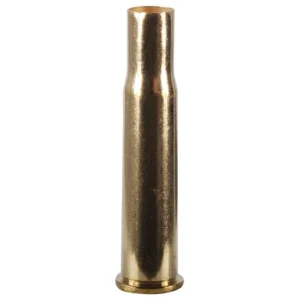
Winchester Brass 32 Winchester Special Bag of 50
Winchester Reloading Brass is manufactured to extremely tight tolerances to ensure smooth feeding and positive chambering. Consistent case-to-case weight and capacity delivers outstanding accuracy. Winchester’s high quality, durable brass can be reloaded several times. New, unprimed brass. This is not loaded ammunition.
Brass Preparation: With bulk rifle brass you may sometimes notice a few case mouths are “out of round” or slightly dented below the shoulder. These imperfections occur in the final tumbling wash operation after the case mouth has been annealed. Brass manufacturers are aware of the case cosmetics and have worked to mitigate it, but due to equipment design, denting may still occur. Minor dents are normally removed in the first firing and will not affect case life or performance. On non-plated brass, you may also notice all the anneal stain might not be polished off, which may give the case neck a pinkish color. With some smaller caliber cases you may notice the case mouths to be slightly belled.
With all new rifle brass, you should first straighten out the case and case mouth, then chamfer and debur the case mouth inside and out. To straighten the case mouth, run the case part way into the sizer die and let the expander ball straighten the brass. To prevent the case neck from stretching, be sure to lubricate the case neck inside the case mouth.
If you are using Nickel plated brass, special care must be taken to lubricate the cases prior to sizing them. Nickel plating is harder than brass and the cases require more effort in sizing. In the event a case becomes stuck, purchase a stuck case remover; don’t use pliers, screwdrivers or other common household tools which could damage your sizing die.
CAD $44.55 -
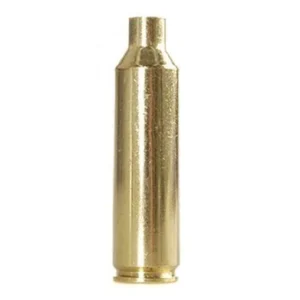
Winchester Brass 7mm Winchester Short Magnum (WSM) Bag of 50
Winchester Reloading Brass is manufactured to extremely tight tolerances to ensure smooth feeding and positive chambering. Consistent case-to-case weight and capacity delivers outstanding accuracy. Winchester’s high quality, durable brass can be reloaded several times. New, unprimed brass. This is not loaded ammunition.
Brass Preparation: With bulk rifle brass you may sometimes notice a few case mouths are “out of round” or slightly dented below the shoulder. These imperfections occur in the final tumbling wash operation after the case mouth has been annealed. Brass manufacturers are aware of the case cosmetics and have worked to mitigate it, but due to equipment design, denting may still occur. Minor dents are normally removed in the first firing and will not affect case life or performance. On non-plated brass, you may also notice all the anneal stain might not be polished off, which may give the case neck a pinkish color. With some smaller caliber cases you may notice the case mouths to be slightly belled.
With all new rifle brass, you should first straighten out the case and case mouth, then chamfer and debur the case mouth inside and out. To straighten the case mouth, run the case part way into the sizer die and let the expander ball straighten the brass. To prevent the case neck from stretching, be sure to lubricate the case neck inside the case mouth.
If you are using Nickel plated brass, special care must be taken to lubricate the cases prior to sizing them. Nickel plating is harder than brass and the cases require more effort in sizing. In the event a case becomes stuck, purchase a stuck case remover; don’t use pliers, screwdrivers or other common household tools which could damage your sizing die.
CAD $74.25 -
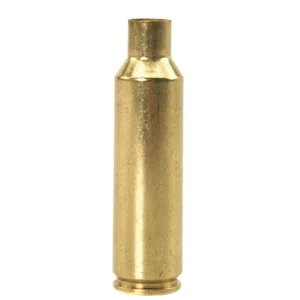
Winchester Brass 300 Winchester Short Magnum (WSM) Bag of 50
Winchester Reloading Brass is manufactured to extremely tight tolerances to ensure smooth feeding and positive chambering. Consistent case-to-case weight and capacity delivers outstanding accuracy. Winchester’s high quality, durable brass can be reloaded several times. New, unprimed brass. This is not loaded ammunition.
Brass Preparation: With bulk rifle brass you may sometimes notice a few case mouths are “out of round” or slightly dented below the shoulder. These imperfections occur in the final tumbling wash operation after the case mouth has been annealed. Brass manufacturers are aware of the case cosmetics and have worked to mitigate it, but due to equipment design, denting may still occur. Minor dents are normally removed in the first firing and will not affect case life or performance. On non-plated brass, you may also notice all the anneal stain might not be polished off, which may give the case neck a pinkish color. With some smaller caliber cases you may notice the case mouths to be slightly belled.
With all new rifle brass, you should first straighten out the case and case mouth, then chamfer and debur the case mouth inside and out. To straighten the case mouth, run the case part way into the sizer die and let the expander ball straighten the brass. To prevent the case neck from stretching, be sure to lubricate the case neck inside the case mouth.
If you are using Nickel plated brass, special care must be taken to lubricate the cases prior to sizing them. Nickel plating is harder than brass and the cases require more effort in sizing. In the event a case becomes stuck, purchase a stuck case remover; don’t use pliers, screwdrivers or other common household tools which could damage your sizing die.
CAD $79.65 -
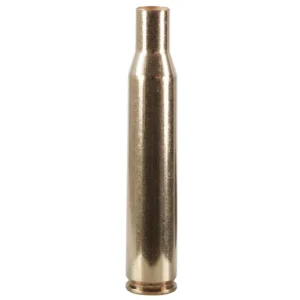
Winchester Brass 270 Winchester
Winchester Reloading Brass is manufactured to extremely tight tolerances to ensure smooth feeding and positive chambering. Consistent case-to-case weight and capacity delivers outstanding accuracy. Winchester’s high quality, durable brass can be reloaded several times. New, unprimed brass. This is not loaded ammunition.
Brass Preparation: With bulk rifle brass you may sometimes notice a few case mouths are “out of round” or slightly dented below the shoulder. These imperfections occur in the final tumbling wash operation after the case mouth has been annealed. Brass manufacturers are aware of the case cosmetics and have worked to mitigate it, but due to equipment design, denting may still occur. Minor dents are normally removed in the first firing and will not affect case life or performance. On non-plated brass, you may also notice all the anneal stain might not be polished off, which may give the case neck a pinkish color. With some smaller caliber cases you may notice the case mouths to be slightly belled.
With all new rifle brass, you should first straighten out the case and case mouth, then chamfer and debur the case mouth inside and out. To straighten the case mouth, run the case part way into the sizer die and let the expander ball straighten the brass. To prevent the case neck from stretching, be sure to lubricate the case neck inside the case mouth.
If you are using Nickel plated brass, special care must be taken to lubricate the cases prior to sizing them. Nickel plating is harder than brass and the cases require more effort in sizing. In the event a case becomes stuck, purchase a stuck case remover; don’t use pliers, screwdrivers or other common household tools which could damage your sizing die.
CAD $43.20 -
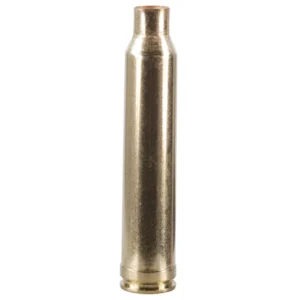
Winchester Brass 300 Winchester Magnum Bag of 50
Winchester Reloading Brass is manufactured to extremely tight tolerances to ensure smooth feeding and positive chambering. Consistent case-to-case weight and capacity delivers outstanding accuracy. Winchester’s high quality, durable brass can be reloaded several times. New, unprimed brass. This is not loaded ammunition.
Brass Preparation: With bulk rifle brass you may sometimes notice a few case mouths are “out of round” or slightly dented below the shoulder. These imperfections occur in the final tumbling wash operation after the case mouth has been annealed. Brass manufacturers are aware of the case cosmetics and have worked to mitigate it, but due to equipment design, denting may still occur. Minor dents are normally removed in the first firing and will not affect case life or performance. On non-plated brass, you may also notice all the anneal stain might not be polished off, which may give the case neck a pinkish color. With some smaller caliber cases you may notice the case mouths to be slightly belled.
With all new rifle brass, you should first straighten out the case and case mouth, then chamfer and debur the case mouth inside and out. To straighten the case mouth, run the case part way into the sizer die and let the expander ball straighten the brass. To prevent the case neck from stretching, be sure to lubricate the case neck inside the case mouth.
If you are using Nickel plated brass, special care must be taken to lubricate the cases prior to sizing them. Nickel plating is harder than brass and the cases require more effort in sizing. In the event a case becomes stuck, purchase a stuck case remover; don’t use pliers, screwdrivers or other common household tools which could damage your sizing die.
CAD $79.65 -
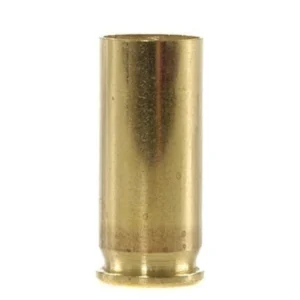
Remington Brass 38 Super +P Bag of 100
Remington cartridge cases are carefully drawn from specially-alloyed brass to provide consistently exact internal volume and resistance to case stretching and brittleness. Primer pocket tolerances are held to .001″, and closely monitored case neck annealing ensures easier re-sizing and longer reloading life. New, unprimed brass. This is not loaded ammunition. Bulk brass should be full-length sized, trimmed and chamfered before loading.
Brass Preparation: With bulk rifle brass you may sometimes notice a few case mouths are “out of round” or slightly dented below the shoulder. These imperfections occur in the final tumbling wash operation after the case mouth has been annealed. Brass manufacturers are aware of the case cosmetics and have worked to mitigate it, but due to equipment design, denting may still occur. Minor dents are normally removed in the first firing and will not affect case life or performance. On non-plated brass, you may also notice all the anneal stain might not be polished off, which may give the case neck a pinkish color. With some smaller caliber cases you may notice the case mouths to be slightly belled.With all new rifle brass, you should first straighten out the case and case mouth, then chamfer and debur the case mouth inside and out. To straighten the case mouth, run the case part way into the sizer die and let the expander ball straighten the brass. To prevent the case neck from stretching, be sure to lubricate the case neck inside the case mouth.
If you are using Nickel plated brass, special care must be taken to lubricate the cases prior to sizing them. Nickel plating is harder than brass and the cases require more effort in sizing. In the event a case becomes stuck, purchase a stuck case remover; don’t use pliers, screwdrivers or other common household tools which could damage your sizing die.
CAD $43.20 -
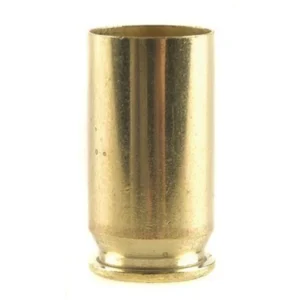
Remington Brass 45 ACP Bag of 100
Remington cartridge cases are carefully drawn from specially-alloyed brass to provide consistently exact internal volume and resistance to case stretching and brittleness. Primer pocket tolerances are held to .001″, and closely monitored case neck annealing ensures easier re-sizing and longer reloading life. New, unprimed brass. This is not loaded ammunition. Bulk brass should be full-length sized, trimmed and chamfered before loading.
Brass Preparation: With bulk rifle brass you may sometimes notice a few case mouths are “out of round” or slightly dented below the shoulder. These imperfections occur in the final tumbling wash operation after the case mouth has been annealed. Brass manufacturers are aware of the case cosmetics and have worked to mitigate it, but due to equipment design, denting may still occur. Minor dents are normally removed in the first firing and will not affect case life or performance. On non-plated brass, you may also notice all the anneal stain might not be polished off, which may give the case neck a pinkish color. With some smaller caliber cases you may notice the case mouths to be slightly belled.With all new rifle brass, you should first straighten out the case and case mouth, then chamfer and debur the case mouth inside and out. To straighten the case mouth, run the case part way into the sizer die and let the expander ball straighten the brass. To prevent the case neck from stretching, be sure to lubricate the case neck inside the case mouth.
If you are using Nickel plated brass, special care must be taken to lubricate the cases prior to sizing them. Nickel plating is harder than brass and the cases require more effort in sizing. In the event a case becomes stuck, purchase a stuck case remover; don’t use pliers, screwdrivers or other common household tools which could damage your sizing die.
CAD $59.40 -
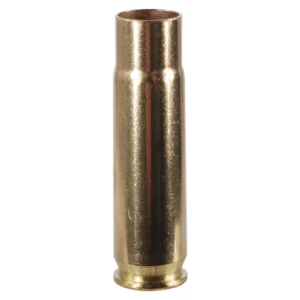
Remington Brass 300 AAC Blackout Bag of 50
Remington cartridge cases are carefully drawn from specially-alloyed brass to provide consistently exact internal volume and resistance to case stretching and brittleness. Primer pocket tolerances are held to .001″, and closely monitored case neck annealing ensures easier re-sizing and longer reloading life. New, unprimed brass. This is not loaded ammunition. Bulk brass should be full-length sized, trimmed and chamfered before loading.
Brass Preparation: With bulk rifle brass you may sometimes notice a few case mouths are “out of round” or slightly dented below the shoulder. These imperfections occur in the final tumbling wash operation after the case mouth has been annealed. Brass manufacturers are aware of the case cosmetics and have worked to mitigate it, but due to equipment design, denting may still occur. Minor dents are normally removed in the first firing and will not affect case life or performance. On non-plated brass, you may also notice all the anneal stain might not be polished off, which may give the case neck a pinkish color. With some smaller caliber cases you may notice the case mouths to be slightly belled.With all new rifle brass, you should first straighten out the case and case mouth, then chamfer and debur the case mouth inside and out. To straighten the case mouth, run the case part way into the sizer die and let the expander ball straighten the brass. To prevent the case neck from stretching, be sure to lubricate the case neck inside the case mouth.
If you are using Nickel plated brass, special care must be taken to lubricate the cases prior to sizing them. Nickel plating is harder than brass and the cases require more effort in sizing. In the event a case becomes stuck, purchase a stuck case remover; don’t use pliers, screwdrivers or other common household tools which could damage your sizing die.
CAD $48.60 -
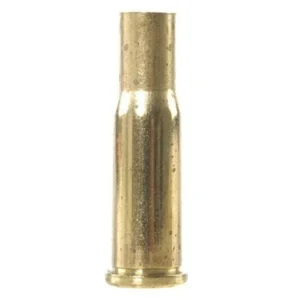
Remington Brass 25-20 WCF Bag of 50
Remington cartridge cases are carefully drawn from specially-alloyed brass to provide consistently exact internal volume and resistance to case stretching and brittleness. Primer pocket tolerances are held to .001″, and closely monitored case neck annealing ensures easier re-sizing and longer reloading life. New, unprimed brass. This is not loaded ammunition. Bulk brass should be full-length sized, trimmed and chamfered before loading.
Brass Preparation: With bulk rifle brass you may sometimes notice a few case mouths are “out of round” or slightly dented below the shoulder. These imperfections occur in the final tumbling wash operation after the case mouth has been annealed. Brass manufacturers are aware of the case cosmetics and have worked to mitigate it, but due to equipment design, denting may still occur. Minor dents are normally removed in the first firing and will not affect case life or performance. On non-plated brass, you may also notice all the anneal stain might not be polished off, which may give the case neck a pinkish color. With some smaller caliber cases you may notice the case mouths to be slightly belled.With all new rifle brass, you should first straighten out the case and case mouth, then chamfer and debur the case mouth inside and out. To straighten the case mouth, run the case part way into the sizer die and let the expander ball straighten the brass. To prevent the case neck from stretching, be sure to lubricate the case neck inside the case mouth.
If you are using Nickel plated brass, special care must be taken to lubricate the cases prior to sizing them. Nickel plating is harder than brass and the cases require more effort in sizing. In the event a case becomes stuck, purchase a stuck case remover; don’t use pliers, screwdrivers or other common household tools which could damage your sizing die.
CAD $32.40 -
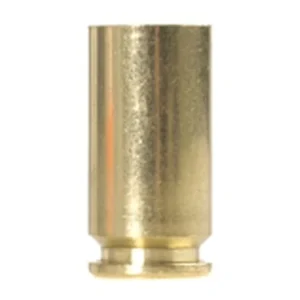
Remington Brass 40 S&W Bag of 100
Remington cartridge cases are carefully drawn from specially-alloyed brass to provide consistently exact internal volume and resistance to case stretching and brittleness. Primer pocket tolerances are held to .001″, and closely monitored case neck annealing ensures easier re-sizing and longer reloading life. New, unprimed brass. This is not loaded ammunition. Bulk brass should be full-length sized, trimmed and chamfered before loading.
Brass Preparation: With bulk rifle brass you may sometimes notice a few case mouths are “out of round” or slightly dented below the shoulder. These imperfections occur in the final tumbling wash operation after the case mouth has been annealed. Brass manufacturers are aware of the case cosmetics and have worked to mitigate it, but due to equipment design, denting may still occur. Minor dents are normally removed in the first firing and will not affect case life or performance. On non-plated brass, you may also notice all the anneal stain might not be polished off, which may give the case neck a pinkish color. With some smaller caliber cases you may notice the case mouths to be slightly belled.With all new rifle brass, you should first straighten out the case and case mouth, then chamfer and debur the case mouth inside and out. To straighten the case mouth, run the case part way into the sizer die and let the expander ball straighten the brass. To prevent the case neck from stretching, be sure to lubricate the case neck inside the case mouth.
If you are using Nickel plated brass, special care must be taken to lubricate the cases prior to sizing them. Nickel plating is harder than brass and the cases require more effort in sizing. In the event a case becomes stuck, purchase a stuck case remover; don’t use pliers, screwdrivers or other common household tools which could damage your sizing die.
CAD $62.10 -
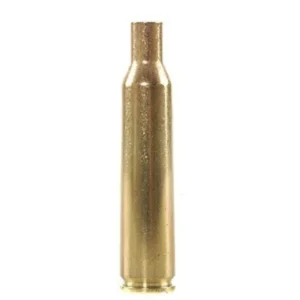
Remington Brass 6mm Remington Bag of 50
Remington cartridge cases are carefully drawn from specially-alloyed brass to provide consistently exact internal volume and resistance to case stretching and brittleness. Primer pocket tolerances are held to .001″, and closely monitored case neck annealing ensures easier re-sizing and longer reloading life. New, unprimed brass. This is not loaded ammunition. Bulk brass should be full-length sized, trimmed and chamfered before loading.
Brass Preparation: With bulk rifle brass you may sometimes notice a few case mouths are “out of round” or slightly dented below the shoulder. These imperfections occur in the final tumbling wash operation after the case mouth has been annealed. Brass manufacturers are aware of the case cosmetics and have worked to mitigate it, but due to equipment design, denting may still occur. Minor dents are normally removed in the first firing and will not affect case life or performance. On non-plated brass, you may also notice all the anneal stain might not be polished off, which may give the case neck a pinkish color. With some smaller caliber cases you may notice the case mouths to be slightly belled.With all new rifle brass, you should first straighten out the case and case mouth, then chamfer and debur the case mouth inside and out. To straighten the case mouth, run the case part way into the sizer die and let the expander ball straighten the brass. To prevent the case neck from stretching, be sure to lubricate the case neck inside the case mouth.
If you are using Nickel plated brass, special care must be taken to lubricate the cases prior to sizing them. Nickel plating is harder than brass and the cases require more effort in sizing. In the event a case becomes stuck, purchase a stuck case remover; don’t use pliers, screwdrivers or other common household tools which could damage your sizing die.
CAD $47.25
- Home
- Handgun Ammunition
- 10mm Auto
- 25 ACP
- 30 Super Carry
- 32 ACP
- 32 H&R Magnum
- 32 S&W
- 32 S&W Long
- 327 Federal Magnum
- 357 Magnum
- 357 Sig
- 38 S&W
- 38 Special
- 38 Super
- 380 ACP
- 40 S&W
- 40 Super
- 400 Cor-Bon
- 41 Remington Magnum
- 44 Remington Magnum
- 44 Special
- 45 ACP
- 45 Auto Rim
- 45 Colt (Long Colt)
- 45 GAP
- 45 Super
- 45 Winchester Magnum
- 454 Casull
- 460 Rowland
- 460 S&W Magnum
- 5.7x28mm FN
- 50 Action Express
- 500 JRH
- 500 S&W Magnum
- 7.62x25mm Tokarev
- 9mm Luger
- 9mm Makarov
- 9x25mm Dillon
- Primers
- Reloading Brass
- Smokeless Powder
- Rifle Ammunition
- 17 Remington
- 204 Ruger
- 22 Hornet
- 22 Nosler
- 22-250 Remington
- 220 Swift
- 221 Fireball
- 222 Remington
- 223 Remington
- 223 Winchester Super Short Magnum
- 224 Valkyrie
- 243 Winchester
- 25-06 Remington
- 257 Roberts
- 257 Weatherby Magnum
- 260 Remington
- 264 Winchester Magnum
- 270 Weatherby Magnum
- 270 Winchester
- 270 Winchester Short Magnum
- 28 Nosler
- 280 Remington
- 280 Remington Ackley Improved 40-Degree Shoulder
- 30 Carbine
- 30 Nosler
- 30-06 Springfield
- 30-30 Winchester
- 30-378 Weatherby Magnum
- 30-40 Krag
- 300 AAC Blackout (7.62x35mm)
- 300 H&H Magnum
- 300 PRC
- 300 Remington Short Action Ultra Magnum
- 300 Remington Ultra Magnum
- 300 Savage
- 300 Weatherby Magnum
- 300 Winchester Magnum
- 300 Winchester Short Magnum
- 303 British
- 308 Winchester
- 32 Winchester Special
- 32-20 WCF
- 325 Winchester Short Magnum (WSM)
- 33 Nosler
- 338 Federal
- 338 Lapua Magnum
- 338 Remington Ultra Magnum
- 338 Winchester Magnum
- 338-06 A-Square
- 340 Weatherby Magnum
- 35 Remington
- 35 Whelen
- 350 Legend
- 358 Winchester
- 375 H&H Magnum
- 375 Ruger
- 375 SOCOM
- 38-55 WCF
- 4.6x30mm HK
- 404 Jeffery
- 416 Remington Magnum
- 416 Rigby
- 44-40 WCF
- 444 Marlin
- 45 Raptor
- 45-70 Government
- 450 Bushmaster
- 458 HAMR
- 458 Lott
- 458 SOCOM
- 458 Winchester Magnum
- 460 Weatherby Magnum
- 470 Nitro Express
- 5.56x45mm NATO
- 50 Beowulf
- 500 Auto Max
- 500 Nitro Express 3″
- 6.5 Creedmoor
- 6.5 Grendel
- 6.5 PRC
- 6.5-300 Weatherby Magnum
- 6.5mm-284 Norma
- 6.5x47mm Lapua
- 6.5x55mm Swedish Mauser
- 6.8 Western
- 6.8mm Remington SPC
- 6mm Advanced Rifle Cartridge (6mm ARC)
- 6mm Creedmoor
- 6mm Remington
- 7.62x39mm
- 7.62x51mm NATO
- 7.62x54mm Rimmed Russian
- 7mm Remington Magnum
- 7mm Remington Short Action Ultra Magnum
- 7mm Remington Ultra Magnum
- 7mm STW
- 7mm Weatherby Magnum
- 7mm-08 Remington
- 7x57mm Mauser (7mm Mauser)
- 7x64mm Brenneke
- 8mm Remington Magnum
- 8x57mm JS Mauser (8mm Mauser) (323 Dia)
- 9.3x62mm Mauser
- 9.3x74mm Rimmed
- Rimfire Ammunition
- Shotgun Ammunition